

The Renters’ Rights Act (RRA) is making widespread changes to the private rental sector and will be implemented in phases over the course of the years to come.
Let’s look at the roadmap of the RRA and when each change is being implemented:
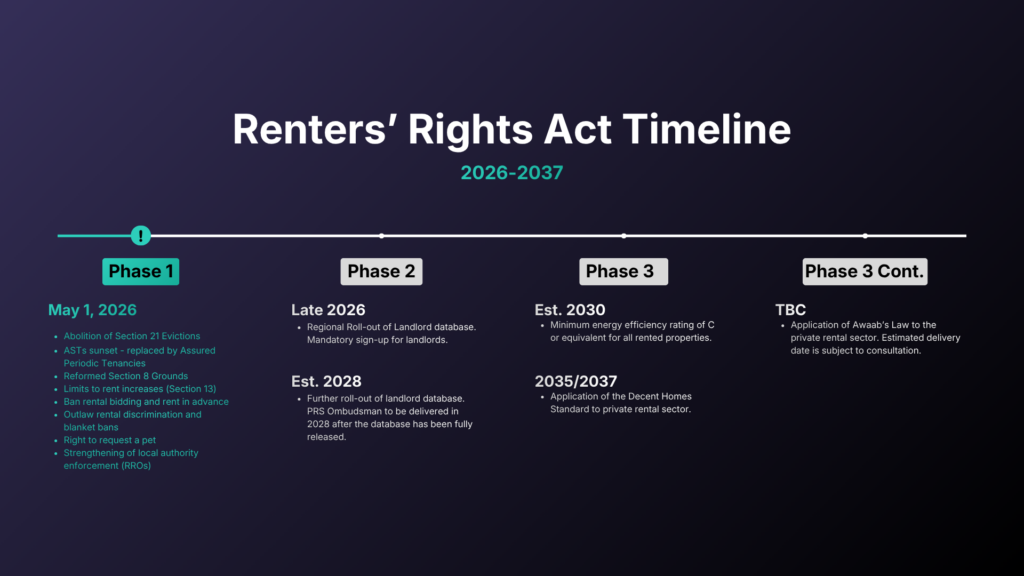
Phase 1 – From 1st May 2026
The first phase delivers the majority of the act’s changes.
The following 8 changes will be delivered on May 1st 2026:
- Abolition of Section 21 ‘No-fault’ Evictions
- ASTs sunset – replaced by Assured Periodic Tenancies
- Reformed Section 8 Grounds
- Limits to rent increases (Section 13)
- Ban rental bidding and rent in advance
- Outlaw rental discrimination and blanket bans
- Right to request a pet
- Strengthening of local authority enforcement (RROs)
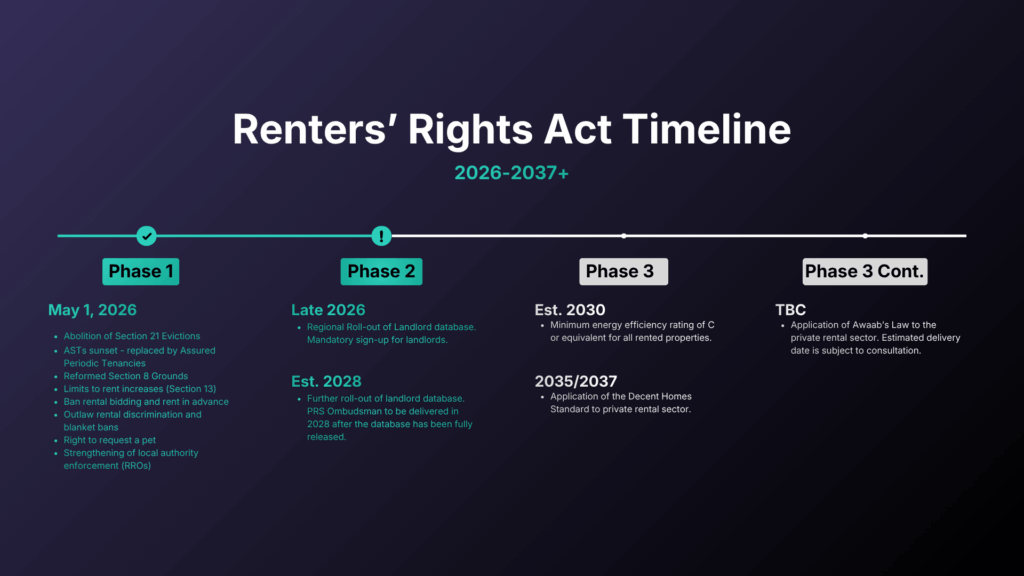
Phase 2 – From late 2026
There are 2 deliverables in this phase: the PRS Ombudsman and the Landlord database. It will be split into two roll-out stages:
Stage 1 – Regional rollout of the landlord database
The roll-out for the database will begin in late 2026. Landlords will be required to sign up to the database.
Signing up will require an annual fee. As of 16/4/26, pricing details have not been released – pricing is expected to be revealed closer to launch.
Stage 2 – Further roll-out of the database & introduction of the Ombudsman
The PRS ombudsman will begin implementation after the database is introduced, and is expected to be delivered in 2028. The ombudsman will only be rolled out once the Secretary of State is satisfied that it is fit for purpose and ready for delivery.
Landlords will be given “sufficient notice in advance” before the ombudsman is launched.
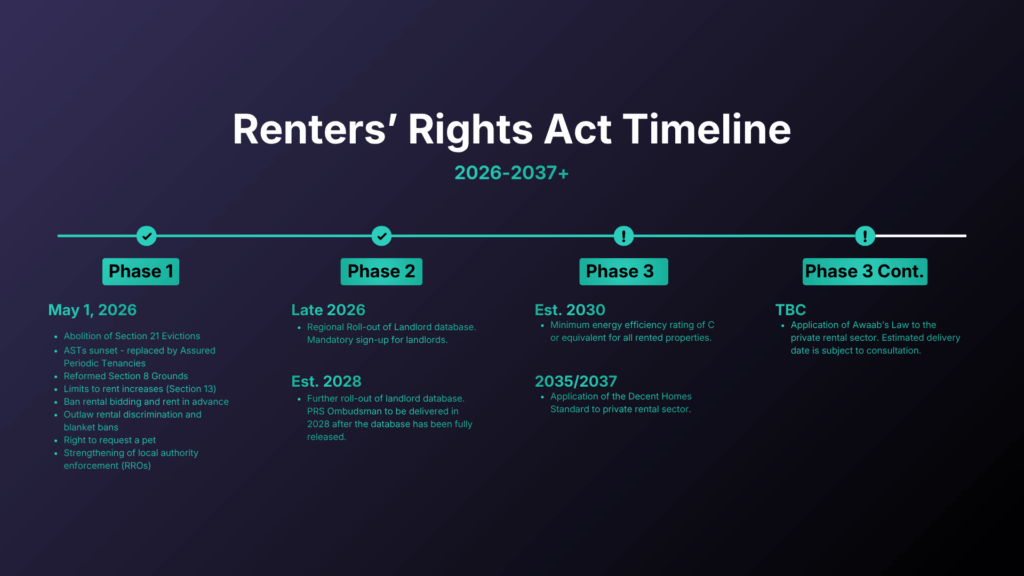
Phase 3 – 2030+ (TBD by consultation)
Phase 3 is reserved for 3 primary deliveries: EPC C, the Decent Homes Standard, and Awaab’s Law:
The Decent Homes Standard (DHS) is being extended to the private rental sector, ensuring all rental properties meet a minimum standard of housing quality.
Following a consultation mid-last year, the proposed implementation timescale for the DHS is either 2035 or 2037.
The government has not yet released any guidance or information on the new standards. They have stated that the Housing Health and Safety Rating System (HHSRS) will be reviewed and applied to the new decent home standards.
Minimum Energy Efficiency Standards (MEES) of EPC C will be applied to the private rental sector by 2030.
This means that unless a valid exemption is in place, any rental property must have an EPC rating of C (Or equivalent) in order to be let out.
Awaab’s Law will also be delivered in this phase, which compels landlords to act on any serious hazards in the property within a certain timescale.
There are no details on implementation timescales for Awaab’s Law as it is subject to further consultation.
If you have any questions about the Renters’ Rights Act or how you may be affected, get in touch with us today.
DISCLAIMER: This article is for informational purposes only and does not constitute legal advice in any capacity.

Renters' Rights Act commences in:
The act comes into force on May 1st 2026. Act now and secure your asset.
Last Updated: 17/04/26